• FINANCING
  • CONTACT
Versa Mechanical | Commercial HVAC Contractor in South Louisiana
  • HVAC Services
    • Installation
    • Repair
    • Replacement
    • Ductwork
    • Preventative Maintenance
  • Mechanical Construction
  • Building Automation
  • Industries
    • Healthcare
    • Distribution
    • Hospitality
    • Manufacturing
    • Restaurants
  • Areas We Serve
    • Baton Rouge
    • New Orleans
    • North Shore
    • Hammond
  • About Us
    • Leadership Team
    • Careers
    • Testimonials
    • Blog
  • Menu Menu

Commercial HVAC Life Expectancy: Lifespans for Chillers, RTUs, and Boilers

 A chiller that quits in July can shut down an entire building, and an emergency replacement usually costs more than a planned one. Commercial HVAC life expectancy gives facility managers a way to see that day coming in advance. Every major system has an age range where reliability starts to slip, and knowing those ranges turns a surprise failure into a line in the budget. This guide covers what to expect from chillers, rooftop units, and boilers, plus the factors that decide where your own equipment lands and how to plan around it.

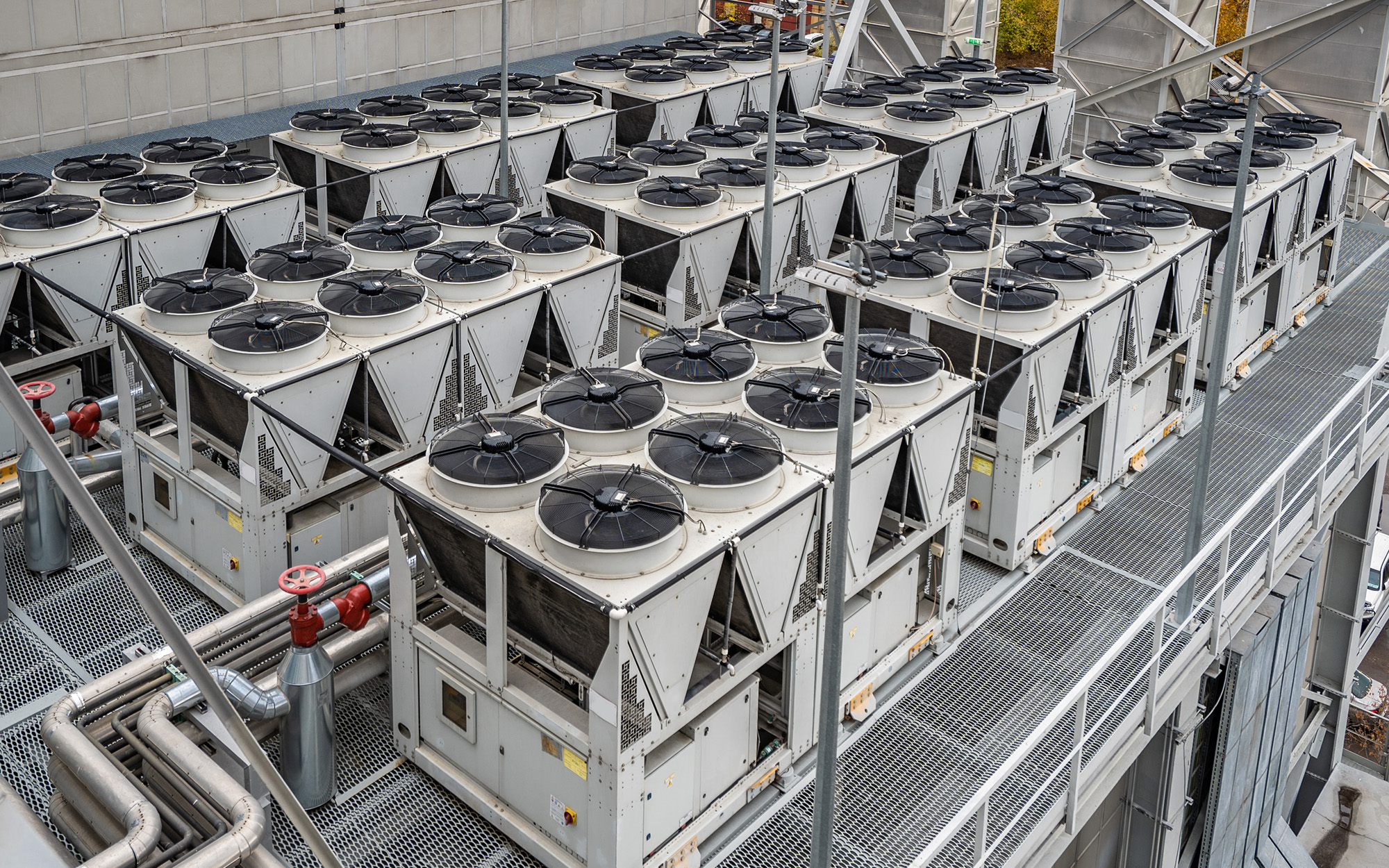
Commercial Hvac Life Expectancy Lifespans For Chillers, Rtus, And Boilers

Commercial HVAC Life Expectancy by Equipment Type

The most widely used life expectancy figures come from industry median service life data, which tracks how long each type of HVAC equipment stays in service. A median is a midpoint, so half of the units in the data lasted longer than the number and half lasted less.

These figures are a solid starting line for commercial HVAC life expectancy planning, but they describe an average building instead of yours. Runtime, maintenance history, and operating conditions can push a unit well above or below its range. The three systems below carry most of the load in a typical commercial facility, so they are the right place to start.

Chillers

Median life for chillers is about 20 years for reciprocating models and 23 years for centrifugal and absorption models. Anyone researching chiller life expectancy should know that well-kept units often run past those marks, especially water-cooled machines with clean tubes and steady refrigerant management. Large hotels with central plants and healthcare facilities that depend on chilled water need this equipment running constantly, so a surprise failure hits them hard.

Planning chiller replacement two to three years ahead gives a team time to budget, order long-lead equipment, and schedule the work during a mild stretch of weather when cooling demand is lower. Because a chiller sits at the center of a chilled water system, that lead time protects the rest of the building.

Rooftop Units

Rooftop units have the shortest range of the three, with a median of about 15 years for single-zone and multi-zone rooftop systems. Rooftop unit life expectancy shrinks further in South Louisiana, where compressors and coils run through long, humid summers with little downtime. Sun, rain, and rooftop debris add wear that indoor equipment never faces, and clogged coils force compressors to work even harder.

Many facilities keep rooftop units going past 15 years, although repair calls tend to climb with each added year and every repair adds to the true cost of keeping an old unit alive. Once a team starts weighing rooftop unit replacement, it helps to compare the cost of ongoing repair with the price of a new unit.

Boilers

Boilers are the long-distance runners of a mechanical room, and the answer to “how long do boilers last” depends heavily on the type. Steel fire-tube boilers have a median life of 25 years, while cast-iron hot water boilers reach 35 years.

Boiler life expectancy also depends on water quality, because scale and corrosion inside the vessel slowly shorten its life, and a boiler with a poor treatment record can fail well ahead of its range. Boilers sit idle for much of the year in South Louisiana, which can stretch their service life when the system stays dry and well treated. Even so, an annual inspection catches small leaks and early corrosion before they turn into major failures.

Consistent maintenance has more influence on equipment lifespan than nearly any other factor a facility controls. Versa builds custom preventative maintenance agreements around the equipment in your building, and a dedicated account manager follows up the same day on every request.

Learn More

What Shortens or Extends Equipment Life

Two identical units installed on the same day can wear out years apart. The difference usually comes from how each one is run and cared for. Four factors do most of the work in pushing a unit toward the short or long end of commercial HVAC life expectancy. Each of them is something a facility team can influence.

Maintenance History

Filters, coils, belts, and tube cleaning all affect how hard a unit has to work. Equipment that gets regular service tends to reach the upper end of commercial HVAC life expectancy, while skipped service often shows up as early failure. Versa’s post-visit reports, with photos, video, and written descriptions, give managers a clear record of what each unit has been through. That record also makes replacement decisions easier to defend.

Runtime and Climate

Equipment in Baton Rouge and across South Louisiana runs more hours each year than equipment in cooler regions, so wear adds up faster than the calendar suggests. Heat and humidity also force coils and compressors to work harder to hold temperature. A unit that is 12 years old here may carry wear that a unit elsewhere would not show until much later. That is why age alone can mislead when comparing buildings in different regions.

Sizing and Installation Quality

Oversized equipment cycles on and off too often, while undersized equipment runs nonstop. Both patterns wear out parts early. Proper load calculations and careful installation set every unit up for a full life, and Versa’s mechanical engineers review that work during evaluation. A unit sized correctly for the building’s real load runs steadier and gives its components a gentler life.

Controls and Monitoring

Trend data from a building automation system shows when equipment is short-cycling or drifting away from its setpoints. Catching those patterns early lets a team fix small problems before they cut into a unit’s life. Well-tuned controls also trim needless runtime, which adds time back to the equipment. Over time, that data builds a picture of which units are holding up and which are slipping.

Building a Replacement Plan Before Equipment Fails

Age is the right place to start a replacement conversation, and condition finishes it. A practical approach is to list every major unit with its install date, then compare each one against its commercial HVAC life expectancy range. Equipment inside the last five years of its range moves onto a watch list, and that list drives the capital budget.

Tracking the warning signs that equipment is near the end of its useful life, such as rising repair bills and falling efficiency, helps confirm the timing. This kind of planning keeps a facility from paying rush prices for equipment ordered in an emergency.

Rooftop units usually reach the watch list first, so RTU replacement is often the earliest line item, followed by chillers and then boilers. A phased schedule lets a facility replace equipment during mild months instead of the peak of summer. Each project goes more smoothly when the scope is defined early, since commercial HVAC replacement involves sizing, equipment removal, installation, and startup on a set timeline.

A written equipment schedule should list each unit’s age, location, last major repair, and expected replacement window, then get updated after every service visit. Facilities that keep this schedule current can answer ownership and finance questions quickly, because the numbers are already on paper. Over time, the schedule shows which units are holding up and which are draining the maintenance budget.

Find Out Where Your Equipment Stands Today

Knowing your commercial HVAC life expectancy numbers is easier with someone who can look at the equipment in person. Versa’s team reviews the age, condition, and repair history of your chillers, rooftop units, and boilers, then puts it into a report your team can reference any time. A free assessment gives you a clear picture of what to budget for over the next several years. You can share as much or as little detail as you have about the building, and the team will take it from there. Reach out today and one of our account managers will follow up the same day.

Share This Post

  • Share on Facebook
  • Share on X
  • Share on WhatsApp
  • Share on Pinterest
  • Share on LinkedIn
  • Share on Tumblr
  • Share on Vk
  • Share on Reddit
  • Share by Mail

More Like This

Replacement Budgeting For Commercial Hvac Unit Cost

What Does Commercial HVAC Unit Cost? A Replacement Guide for Louisiana Facilities

Commercial HVAC, HVAC Replacement
https://versamechanical.com/wp-content/uploads/2026/09/Replacement-Budgeting-for-Commercial-HVAC-Unit-Cost.jpg 1250 2000 Abstrakt Marketing /wp-content/uploads/2026/05/Versa-Mechanical-Contractors-Logo.png Abstrakt Marketing2026-09-11 10:41:112026-09-11 10:41:15What Does Commercial HVAC Unit Cost? A Replacement Guide for Louisiana Facilities
Wide View Of Roof With A Lot Of Hvac Units

Commercial HVAC Maintenance Checklist for Facility Managers

Commercial HVAC, HVAC Maintenance
https://versamechanical.com/wp-content/uploads/2026/07/Wide-view-of-roof-with-a-lot-of-HVAC-units.jpeg 1536 2048 Abstrakt Marketing /wp-content/uploads/2026/05/Versa-Mechanical-Contractors-Logo.png Abstrakt Marketing2026-09-11 10:29:012026-10-08 08:18:38Commercial HVAC Maintenance Checklist for Facility Managers
Man In Versa Hat Working On Hvac

How to Make the Commercial HVAC Repair vs. Replacement Call for Aging Equipment

Commercial HVAC, HVAC Repair
https://versamechanical.com/wp-content/uploads/2026/07/Man-in-versa-hat-working-on-HVAC.jpg 1250 2000 Abstrakt Marketing /wp-content/uploads/2026/05/Versa-Mechanical-Contractors-Logo.png Abstrakt Marketing2026-09-11 10:11:362026-09-11 10:16:21How to Make the Commercial HVAC Repair vs. Replacement Call for Aging Equipment
Man Working On Hvac Unit

Commercial HVAC Replacement Guide: Signs, Costs, & ROI

Commercial HVAC
https://versamechanical.com/wp-content/uploads/2026/07/Man-working-on-HVAC-Unit.png 1448 1086 Xander Killebrew /wp-content/uploads/2026/05/Versa-Mechanical-Contractors-Logo.png Xander Killebrew2026-08-17 15:49:542026-09-10 14:52:40Commercial HVAC Replacement Guide: Signs, Costs, & ROI
Previous Previous Previous Next Next Next

Categories

  • Commercial HVAC
  • HVAC Maintenance
  • HVAC Repair
  • HVAC Replacement
Versa Mechanical Contractors Logo White

Stay Connected

About Us

Versa Mechanical Contractors is a full-service commercial and industrial mechanical contractor serving South Louisiana.

What We Do

HVAC Services

Building Automation Systems

Mechanical Construction

Contact Us

11931 Industriplex Blvd.
Baton Rouge, LA

(225) 230-9887

[email protected]

Copyright © Versa Mechanical Contractors. All rights reserved.
  • Privacy Policy
  • Sitemap
Scroll to top Scroll to top Scroll to top

This site uses cookies. By continuing to browse the site, you are agreeing to our use of cookies.

AcceptLearn more

Cookie and Privacy Settings


How we use cookies

We may request cookies to be set on your device. We use cookies to let us know when you visit our websites, how you interact with us, to enrich your user experience, and to customize your relationship with our website.

Click on the different category headings to find out more. You can also change some of your preferences. Note that blocking some types of cookies may impact your experience on our websites and the services we are able to offer.

Essential Website Cookies

These cookies are strictly necessary to provide you with services available through our website and to use some of its features.

Because these cookies are strictly necessary to deliver the website, refusing them will have impact how our site functions. You always can block or delete cookies by changing your browser settings and force blocking all cookies on this website. But this will always prompt you to accept/refuse cookies when revisiting our site.

We fully respect if you want to refuse cookies but to avoid asking you again and again kindly allow us to store a cookie for that. You are free to opt out any time or opt in for other cookies to get a better experience. If you refuse cookies we will remove all set cookies in our domain.

We provide you with a list of stored cookies on your computer in our domain so you can check what we stored. Due to security reasons we are not able to show or modify cookies from other domains. You can check these in your browser security settings.

Other external services

We also use different external services like Google Webfonts, Google Maps, and external Video providers. Since these providers may collect personal data like your IP address we allow you to block them here. Please be aware that this might heavily reduce the functionality and appearance of our site. Changes will take effect once you reload the page.

Google Webfont Settings:

Google Map Settings:

Google reCaptcha Settings:

Vimeo and Youtube video embeds:

Accept settingsHide notification only
  • CONTACT
  • FINANCING